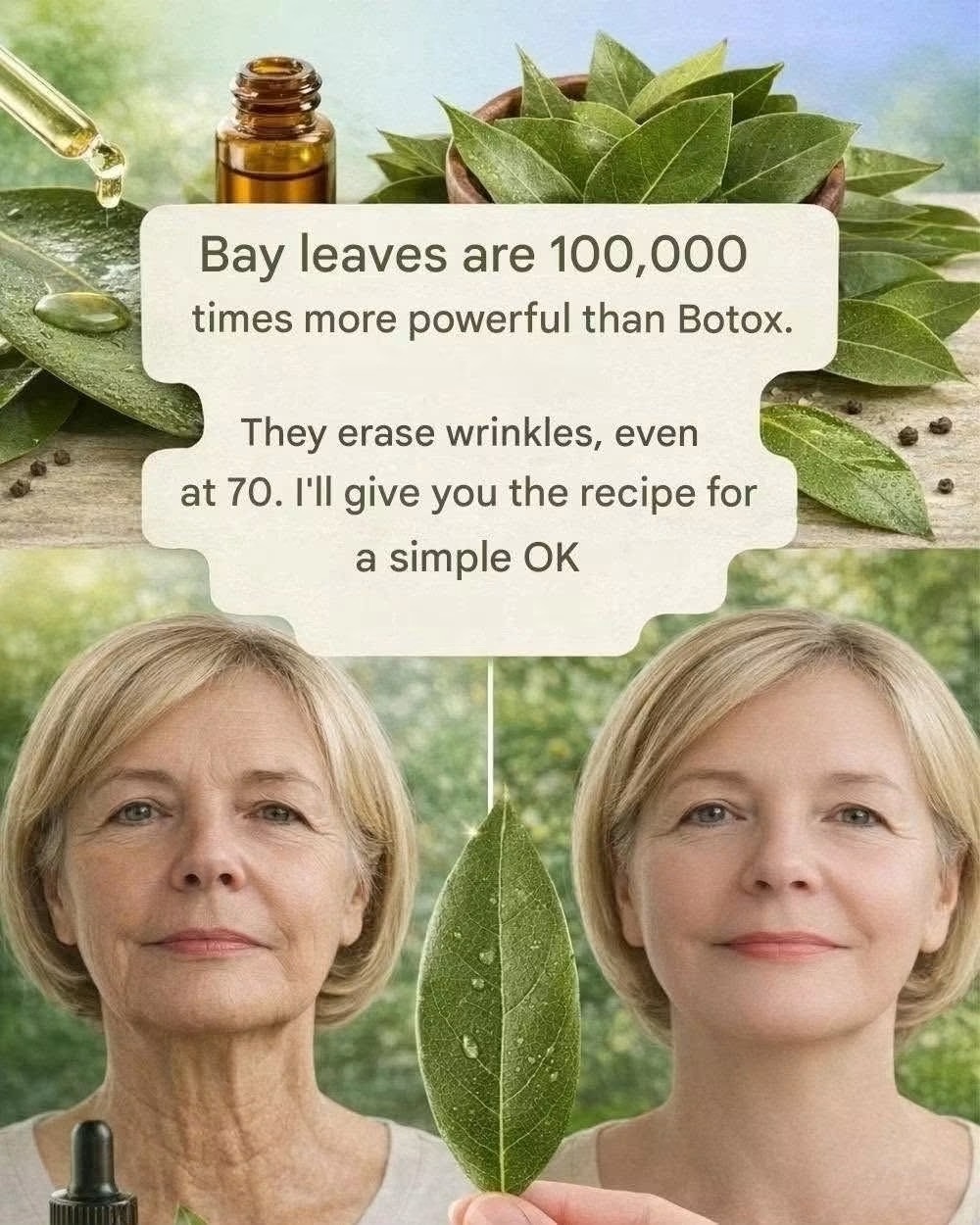
Bay leaves are best known as an aromatic ingredient used in soups, stews, sauces, and traditional dishes. Their distinctive fragrance comes from natural compounds found in the leaves, which have also attracted scientific interest for their potential antioxidant and antimicrobial properties.
In addition to their culinary uses, bay leaves sometimes appear in homemade skin care recipes shared online. These preparations may include bay leaf water, herbal infusions, or mixtures intended to refresh the skin. However, natural ingredients do not automatically provide proven cosmetic benefits, and the effects of bay leaves on human skin have not been extensively studied.
Some online claims suggest that bay leaves can remove wrinkles, reverse aging, or work thousands of times better than Botox. These statements are not supported by reliable clinical evidence. Bay leaves may be used as a traditional botanical ingredient, but they cannot be considered a replacement for established skin care treatments.
In this article, we explore the properties of bay leaves, their possible role in a skin care routine, a simple preparation method, and important precautions for safe use.
What Are Bay Leaves
Bay leaves commonly used in cooking usually come from the plant Laurus nobilis, an evergreen tree native to the Mediterranean region. The leaves are harvested fresh or dried and are valued for their strong aroma and flavor.
Bay leaves contain several naturally occurring compounds, including aromatic oils and plant substances that researchers have studied in laboratory settings. The exact chemical composition can vary according to growing conditions, harvesting methods, and storage.
Although bay leaves have a long history of culinary and traditional use, research on their direct effects on human skin remains limited. Evidence about isolated compounds in laboratory experiments should not be interpreted as proof that a homemade bay leaf preparation can reduce wrinkles or treat skin conditions.
1. Bay Leaves Contain Antioxidant Compounds
The skin is exposed to environmental factors such as sunlight and air pollution, which can contribute to oxidative stress. Antioxidants are substances that can help counter the effects of unstable molecules under certain conditions.
Bay leaves contain plant compounds with antioxidant activity in laboratory studies. This has led researchers to investigate their potential biological properties.
However, laboratory antioxidant activity does not establish that applying bay leaf water to the face will prevent wrinkles, reverse skin aging, or repair sun damage.
For everyday skin care, proven sun protection, gentle cleansing, and regular moisturizing remain more reliable choices than untested herbal preparations.
2. Can Bay Leaves Reduce Wrinkles
Wrinkles develop naturally as the skin changes with age. Sun exposure, smoking, genetics, and environmental factors can also influence their appearance.
Bay leaves are sometimes promoted as a natural anti-aging remedy, but there is insufficient clinical evidence to show that applying bay leaf water or bay leaf extract significantly reduces wrinkles.
A homemade infusion may feel refreshing on the skin, but that sensation should not be confused with a demonstrated anti-aging effect.
People who want to reduce the appearance of fine lines can consider evidence-based skin care ingredients, such as topical retinoids when appropriate, and daily broad-spectrum sunscreen. A dermatologist can help select suitable products based on skin type and individual needs.
3. Bay Leaves and Skin Cleansing
Some traditional beauty recipes use herbal water as a simple skin rinse. Bay leaves can be steeped in hot water to create an aromatic infusion, although their cleansing benefits have not been established through strong clinical research.
An herbal rinse does not necessarily remove dirt, oil, sunscreen, or makeup as effectively as a gentle facial cleanser.
If you enjoy using botanical ingredients, consider them optional additions rather than essential steps in a skin care routine.
Avoid using hot infusions directly on the face. Allow any preparation to cool completely, and never apply it to broken, irritated, or inflamed skin.
4. Potential Antimicrobial Properties
Certain compounds found in bay leaves have demonstrated antimicrobial activity in laboratory experiments. Scientists continue to study various plant extracts to understand their possible applications.
However, laboratory results do not prove that bay leaf water treats acne, fungal infections, or bacterial skin conditions in people.
Acne can have several causes, including excess oil production, blocked pores, inflammation, and hormonal influences. Appropriate treatment may include established ingredients such as benzoyl peroxide or salicylic acid, depending on the condition.
If you have persistent acne, an unexplained rash, or a suspected skin infection, seek advice from a qualified healthcare professional rather than relying on bay leaf preparations.
5. Bay Leaves and Skin Hydration
Healthy skin depends on an intact skin barrier that helps retain moisture and protect against irritants.
Bay leaf water has not been established as a moisturizer. Because it does not necessarily contain ingredients that effectively support the skin barrier, it should not replace a suitable facial moisturizer.
For dry skin, look for products containing well-studied moisturizing ingredients, such as glycerin, ceramides, or hyaluronic acid.
A simple routine that includes gentle cleansing and regular moisturizing is generally more useful than relying on an untested herbal rinse.
How to Make Bay Leaf Water at Home
If you want to explore the traditional use of bay leaves as a botanical skin care ingredient, a small batch of plain bay leaf water is one possible preparation. It should be treated as an unproven cosmetic rinse, not as a wrinkle treatment.
Ingredients
- 2 clean, food-grade dried bay leaves
- 1 cup of water
Instructions
Step 1: Prepare the leaves
Choose clean bay leaves from a reputable source. Do not use leaves from unidentified plants or leaves that may have been exposed to pesticides.
Step 2: Heat the water
Bring one cup of water to a boil in a clean saucepan.
Step 3: Add the bay leaves
Place the leaves in the water and allow them to simmer gently for approximately 5 minutes.
Step 4: Allow the infusion to cool
Remove the saucepan from the heat and let the liquid cool completely.
Step 5: Strain the liquid
Remove the leaves using a clean strainer and transfer the infusion into a clean container.
Step 6: Test before use
Apply a small amount to a limited area of skin and observe for irritation before considering any further use. A patch test can reduce uncertainty but cannot guarantee that an allergic reaction will not occur.
Do not use the preparation if it causes redness, itching, burning, or swelling.
How Should You Apply It
If your skin tolerates the preparation, you may gently dab a small amount onto a limited area of intact skin using clean hands or a clean cotton pad.
Avoid the eyes, lips, and other sensitive areas. Do not scrub the skin or leave the preparation on if irritation develops.
Because homemade herbal water lacks a validated preservative system, it can become contaminated. The safest option is to prepare only a small quantity, use it immediately, and discard leftovers instead of storing them for repeated application.
Important Safety Precautions
Natural skin care products can still cause unwanted reactions. Bay leaf preparations should be used cautiously, especially on sensitive skin.
Perform a Patch Test
Before trying a new botanical preparation, test a small amount on a limited area of skin. Stop using it if you experience itching, redness, burning, or swelling.
People with eczema, rosacea, or a damaged skin barrier may be more sensitive to unfamiliar ingredients.
Do Not Apply Bay Leaf Essential Oil Directly
Bay leaf essential oil is much more concentrated than an ordinary water infusion. It may cause irritation or allergic contact dermatitis when used improperly.
Do not apply undiluted essential oil to the face, and do not ingest essential oil as a beauty remedy.
Avoid the Eye Area
Keep herbal infusions and essential oils away from the eyes. If a product enters the eye, rinse thoroughly with clean water and seek medical advice if irritation continues.
Keep Homemade Preparations Clean
Homemade botanical water does not have the same quality controls as a commercially formulated cosmetic product. Contamination can occur during preparation, storage, or application.
Discard preparations that become cloudy, develop an unusual smell, or show other signs of contamination. When in doubt, do not use them.
Do Not Expect Botox-Like Results
Botox is a medical treatment that uses a purified form of botulinum toxin to temporarily reduce the activity of selected muscles. Bay leaf water has not been shown to produce the same effect.
Claims that bay leaves are 100,000 times more powerful than Botox are unsupported and should not guide skin care decisions.
A Simple Daily Routine for Healthier-Looking Skin
If your goal is smoother, healthier-looking skin, a consistent routine is usually more useful than a single homemade remedy.
Morning
Wash your face with a gentle cleanser suitable for your skin type. Apply a moisturizer if needed, followed by a broad-spectrum sunscreen with SPF 30 or higher.
Sun protection helps reduce UV-related skin damage and is one of the most important steps in preventing premature skin aging.
Evening
Cleanse gently to remove dirt, oil, and sunscreen. Apply a moisturizer to support the skin barrier.
If you want to address wrinkles, uneven tone, or acne, consider products with established evidence and introduce them gradually. A dermatologist can advise whether ingredients such as retinoids are appropriate for you.
Maintain Healthy Habits
Adequate sleep, a balanced diet, avoiding smoking, and protecting your skin from excessive sun exposure can all contribute to overall skin health.
No herbal drink, leaf infusion, or homemade mask can guarantee that wrinkles will disappear.
Frequently Asked Questions About Bay Leaves for Skin
Can Bay Leaves Remove Wrinkles Permanently
There is no reliable clinical evidence that bay leaf water removes wrinkles permanently. Wrinkles are influenced by age, genetics, sun exposure, and other factors.
Can I Use Bay Leaf Water Every Day
Daily use has not been adequately studied for cosmetic benefits or long-term safety. If you choose to try it, use caution and stop if irritation develops. It is not necessary for a healthy skin care routine.
Is Bay Leaf Water Good for Acne
Bay leaf water has not been established as an effective acne treatment. Persistent or severe acne may benefit from evidence-based products or professional medical advice.
Can Bay Leaves Replace Botox
No. Bay leaf preparations have not been shown to produce Botox-like effects on facial muscles or wrinkles.
Is Homemade Bay Leaf Water Safe to Store
Homemade infusions do not contain a validated preservative system. Prepare small quantities, use them promptly, and discard leftovers rather than keeping them for extended periods.
Final Thoughts
Bay leaves are useful culinary herbs that contain aromatic plant compounds and have a long history of traditional use. Their potential antioxidant and antimicrobial properties are being explored, but evidence for direct skin care benefits remains limited.
There is no reliable evidence that bay leaves erase wrinkles, reverse aging, or outperform Botox. A homemade bay leaf infusion may be interesting to explore as an optional botanical rinse, but it should not be treated as a proven anti-aging solution.
For healthier-looking skin, focus on daily sun protection, gentle cleansing, appropriate moisturizing, and evidence-based treatments when needed. If you have persistent skin concerns or a history of sensitivity, consult a dermatologist before trying unfamiliar herbal preparations.